
Mose Tolliver

I first saw Mose Tolliver’s paintings at the Yard Dog Gallery in Austin sometime in the ’90s. Weird stuff. Birds, bus passengers, snakes, fish, fruit, flying pterodactyls. Titles like Watermelon…My 3rd, Ray Charles Dancers, Wide Dinosaur Bird, Bow-Legged Sal.
I was touring with The Silos then. We’d been hanging out with Randy Franklin, who—along with his wife, Jann—had recently opened a great gallery on South Congress called Yard Dog, with a bias toward Outsider and folk art. We might have even played the gallery. Not sure. But there we were. I gravitated toward Mose’s work on the wall. Stood there for a long while, staring. And the paintings stared back. I don’t know exactly why they hit me the way they did, but they did.
Randy suggested that if we were ever passing through Montgomery, Alabama, we ought to go see Mose. As it happened, we were. So we did.
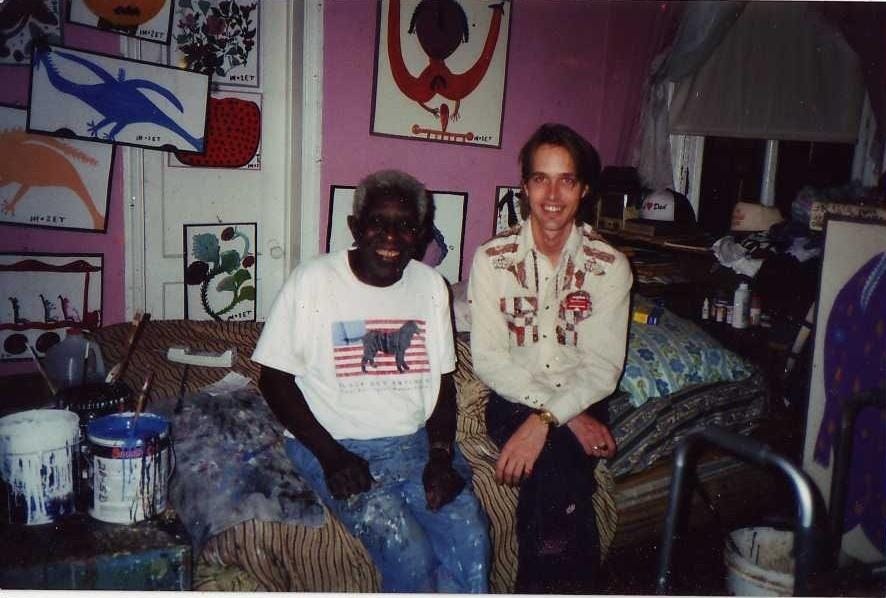
We found the address and stood on the porch, knocking on the screen door, until a soft voice invited us in. Mose was sitting up in bed, painting. A walker sat within arm’s reach. At the foot of the bed, a paint-splattered box held everything he needed. That was the setup. He couldn’t get around much, but he could stretch across that bed, drag a piece of plywood toward him, and paint on it. His mobility issues hardly slowed him down when it came to making art.
When he finished a painting, he’d lean the plywood against a little space heater—presumably to dry. It looked like a system. He generally painted on plywood and nailed a beer-can or soda-can pull tab to the back to make a hanging ring. (I wonder if they’ve got a stash of those pop-tops somewhere. Even back then, the old-style tabs were getting harder to find.) Anyway, that was his studio. That was the whole operation.
We hung out for a while. He made us feel welcome. There were paintings everywhere in that shotgun shack—jammed to the ceiling. Twisted animals. Moose-looking women. Women riding bicycles. A painted refrigerator. More than one painted guitar. Old doors. Painted objects of all kinds. People must’ve dragged them in for him to work on. Every surface felt alive. It was exciting. Immersive. A little overwhelming.
At one point, Walter Salas-Humara’s brother Ignacio—who was playing drums on that tour—asked Mose why he painted the same image over and over again. Mose shrugged.
“Uh… people seem to like ’em.”
No MFA gibberish from Mose.
Tom Freund, who was playing bass with The Silos at the time, started picking up paintings, holding them up, and asking, “How much?”
Mose never varied. No haggling. No explanation. Just said, every time: “Fiddy.”
We all left with paintings that afternoon. And Ignacio snapped this photo.
Mose painted until a stroke stopped him in 2005. He died the following year. The funeral procession stretched for a mile.
Here’s the backstory: In the late ’60s, Mose was working in a furniture factory when a thousand-pound crate of marble slipped off a forklift and crushed his legs. His employer’s son was shaken by it and, during Mose’s rehabilitation, would visit often—encouraged him to paint, bought supplies, took a real interest. Something clicked.
Mose used house paint and worked on whatever was around. People in Montgomery responded—regular folks. They brought him leftover paint. And eventually, folks like the Metropolitan Museum of Art took notice. The work gave him purpose. And along with that purpose, it paid. He managed to support a pretty large extended family through his art.
The next time I found myself in Austin, I stopped by Yard Dog and thanked Randy for the tip about visiting Mose in Montgomery. I recounted the whole experience. Randy looked at me, puzzled, and said, “Was there not anybody there?”
Apparently, it was unusual for Mose not to have family around keeping an eye on the breadwinner. Randy noted that if they had been, the prices might’ve been more… specific. Instead of just “fiddy.”
But because of that, we got real quality time. We had Mose T to ourselves. It was one of those tour detours that usually lead nowhere—but every once in a while, they really pay off.
I still get the same good feeling when I look at those paintings. They’re why Stephie shuts the curtains at night—she doesn’t like the morning light hitting them. Doesn’t want them to fade. She’s good that way.
If you want to know more, here’s the dealer in Montgomery who handles Mose’s work. There’s a bio there too.
Thanks for subscribing. For being here. They say the only way to get good at writing is to actually do it—one misspelled word at a time (praise be to spellcheck). That’s one reason I’m here. You’re the other.
Onwards,
—Chuck
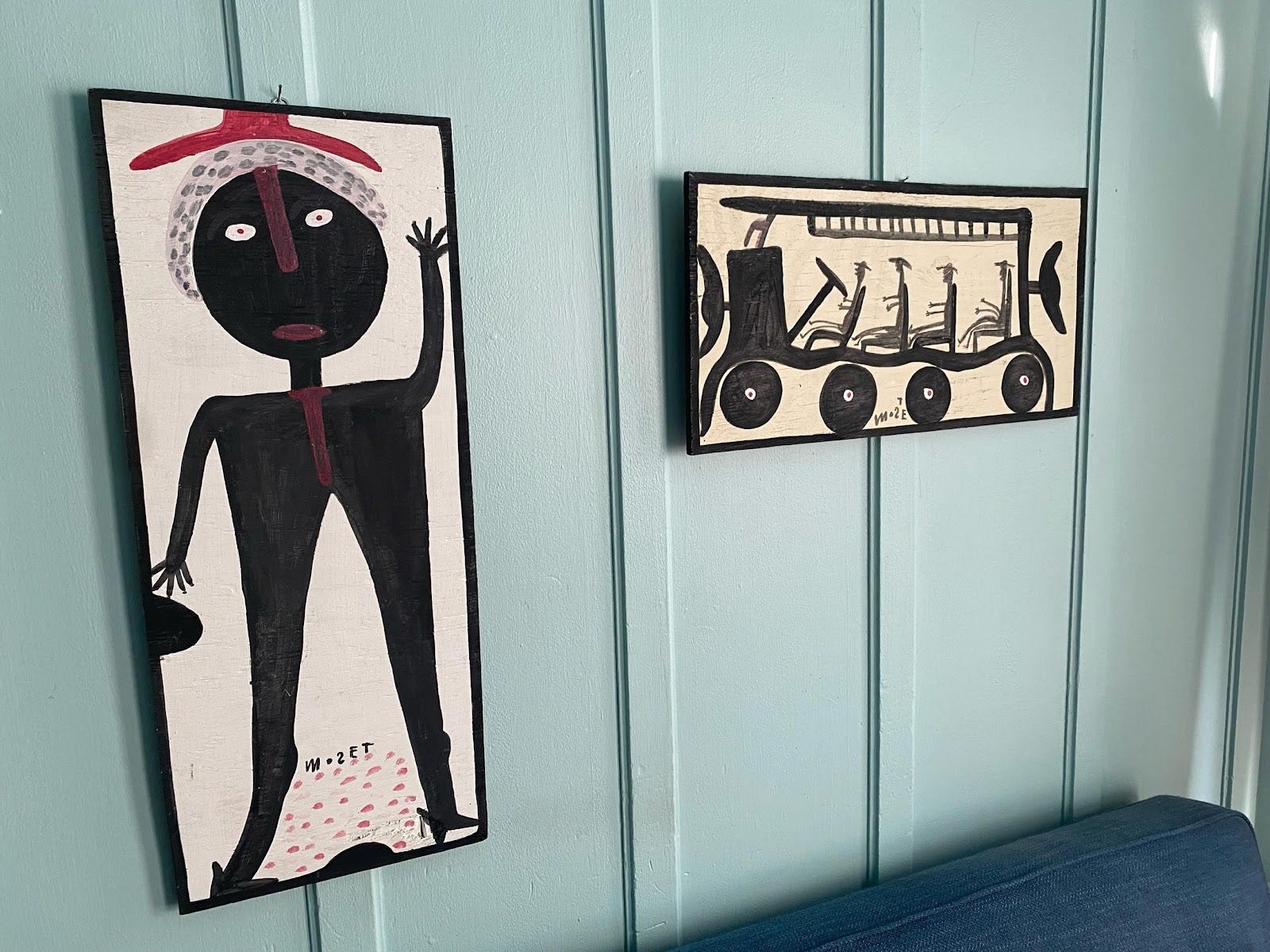
[An earlier tribute to Mose Tolliver was featured in MAGNET]
You tell us about Mose. We tell others about you. The others tell everyone about us.
Went to his house years ago and got myself a watermelon painting which now I have no idea where it is! Really nice man very cool and weird paintings